
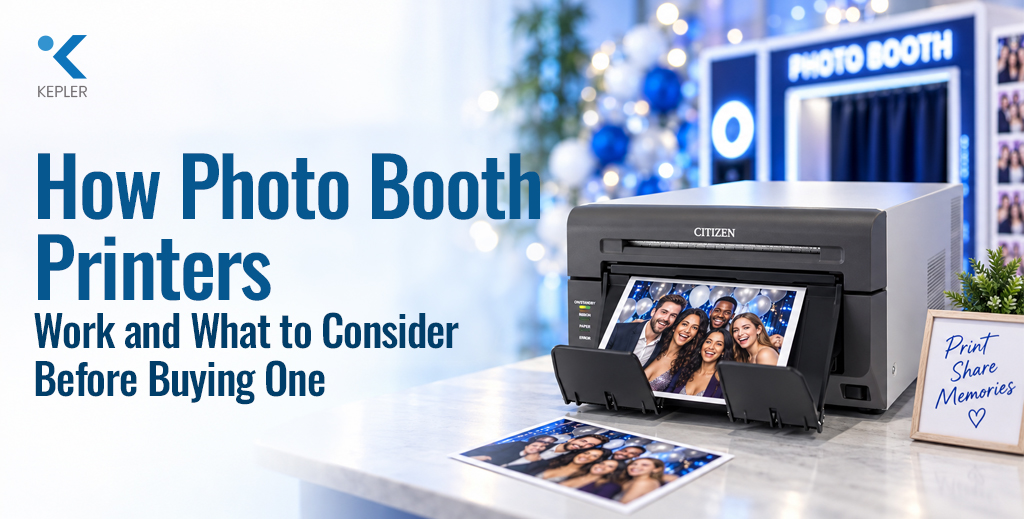
Imagine attending a wedding, corporate event, or exhibition where you take a fun photo, add a personalized frame or message, and receive the printed picture within moments. That quick experience may look simple from the outside, but it depends on the right photo booth printer working smoothly behind the scenes.
For businesses offering photo booth services, event photographers, entertainment venues, and organizations using interactive photo experiences, choosing the right printer can make a noticeable difference. A printer that is too slow can create queues, while one that is not designed for regular photo printing may struggle with the demands of busy events.
So, what exactly is a photo booth printer? How does it work? Can you use a regular photo printer for a photo booth? And what should you look for before investing in one?
Let’s explore these questions and look at the factors that can help you choose a photo printing solution that fits your requirements.
What Is a Photo Booth Printer?
A photo booth printer is a printer used to produce physical photographs from images captured through a photo booth system. It forms part of a larger setup that can include a camera, touchscreen or display, photo booth software, lighting, and printing equipment.
The process is relatively straightforward. A person takes a photograph through the booth, and the software processes the image according to the selected layout or design. The finished image is then sent to the printer, which produces the physical photograph.
Depending on the setup, users may be able to add frames, logos, text, filters, or other effects before printing.
This makes a photo booth printer different from a printer used occasionally at home. In an event environment, the equipment may need to handle repeated print requests while maintaining consistent output.
Think about a busy wedding with dozens or even hundreds of guests. If every guest wants a physical copy, the printer needs to keep up with the workflow without creating unnecessary delays.
How Does a Photo Booth Printer Work?
The basic photo booth printing process can be understood in a few simple stages.
First, the camera captures the photograph. The image is then transferred to the photo booth software, where users may be given options to review or customize it.
Once the image is ready, the software sends the print command to the connected printer. The printer processes the image and produces the photograph using its supported printing technology and media.
Many professional photo printers use dye-sublimation technology for photographic output. This type of printing process is designed specifically for producing photo prints and can provide consistent results for repeated printing.
The printer therefore plays an important role in the overall user experience. Even if the camera and software work perfectly, slow or unreliable printing can make the photo booth experience less enjoyable.
For this reason, choosing a printer should involve looking at the complete workflow, rather than considering image quality alone.
What Should You Consider When Choosing a Photo Booth Printer?
Choosing a photo booth printer starts with a simple question:
How will you actually use it?
A printer for occasional private events may have different requirements from one used by a professional photo booth business every weekend. Before making a decision, consider the following factors.
Print Speed
Speed is particularly important when multiple people are waiting for their photographs.
If the printer takes too long to produce each image, a queue can develop quickly during busy events. Faster printing can help maintain a smoother flow between taking the photograph and receiving the finished print.
Instead of looking only at a manufacturer’s general speed claim, consider how quickly you need photographs to be available in your actual working environment.
Print Quality
The purpose of a photo booth is to create memorable photographs, so the quality of the printed image matters.
Look for a printer that can produce clear details, consistent colors, and attractive photographic output. Skin tones and small image details can be particularly noticeable in portrait photographs.
However, remember that the final result is influenced by more than the printer itself. The camera, lighting, image processing, paper or media, and printing technology can all affect the finished photograph.
Supported Print Sizes
Think about the types of photographs you want to offer.
Some businesses may primarily provide standard photo prints, while others may want multiple sizes for different event packages. Checking the printer’s supported media formats before purchasing can prevent limitations later.
If you plan to offer different layouts, make sure the printer can accommodate the sizes and formats required by your photo booth software.
Media and Consumables
A photo printer cannot operate without suitable printing media and consumables.
Before choosing a model, understand what type of media it requires, how frequently it may need to be replaced, and how much each print is likely to cost.
This is particularly important for businesses because consumable expenses can become significant when printing large numbers of photographs.
Portability
Do you plan to move the photo booth from one venue to another?
If so, portability can become an important consideration. A portable photo printer can be useful when the entire photo booth setup needs to be transported between weddings, parties, exhibitions, or corporate events.
However, portability should not be considered by itself. A smaller printer may be easier to transport, but businesses should also consider whether it can handle their expected workload.
Connectivity
A photo booth printer needs to communicate effectively with the rest of the setup.
Depending on the equipment and software being used, businesses may need to consider available connectivity options and compatibility. The smoother the connection between the photo booth software and printer, the easier it can be to manage the printing workflow.
Running Costs
The purchase price is only one part of the overall cost.
Consider the ongoing expenses associated with media, consumables, maintenance, and servicing. If your business produces a large number of photographs, even a small difference in the cost of each print can have an impact over time.
A useful question to ask is:
“What will each finished photograph actually cost me?”
That can give you a better understanding of the long-term cost of the printer.
Exploring Photo Printers for Photo Booth Applications
When choosing a photo booth printer, businesses may come across different professional photo printing brands and models designed for event and photographic applications. Citizen is one brand worth considering when comparing options for photo printing, particularly when businesses are looking for dedicated equipment rather than a standard office printer.
For example, the Citizen CX02 Digital Photo Printer can be considered when exploring photo printing solutions for photo booth and event applications. It provides an example of the type of dedicated photo printer businesses can evaluate when they need consistent photographic output as part of an event setup.
Another option from the same brand is the Citizen CY02 Photo Printer. Businesses can consider this model when comparing professional photo printing equipment based on their expected workload and application. Rather than selecting a printer simply because of its brand or model, it is important to consider factors such as print requirements, event volume, media compatibility, operating costs, and the overall photo booth workflow.
Looking at examples from a brand such as Citizen can help businesses understand the range of professional photo printers available. However, the right choice ultimately depends on how the equipment will be used. A printer intended for occasional event use may have different requirements from one that needs to support continuous printing at busy weddings, exhibitions, or corporate events.
Portability in Photo Booth Printing
Portability can be an important consideration when choosing a photo booth printer, especially for businesses and photographers who operate at different venues. Since photo booths are often set up for weddings, parties, exhibitions, corporate events, and other temporary occasions, the printer needs to fit comfortably into the overall event setup.
A portable photo printer can be useful in these situations because the equipment may need to be transported, installed, and packed away regularly. However, being portable does not mean that a printer is necessarily separate from a photo booth printer. In fact, many photo booth setups can use compact and portable photo printing equipment.
When comparing options, consider how easily the printer can be transported and positioned within the booth setup, along with factors such as print speed, print quality, connectivity, media handling, and expected printing volume. The goal is to find a printer that is convenient to move while still being suitable for the demands of the photo booth.
So, rather than treating photo booth printers and portable photo printers as two completely different categories, think of portability as one of the features that may make a photo printer suitable for photo booth applications.
Can You Use a Regular Photo Printer for a Photo Booth?
A regular photo printer may be capable of printing photographs, but that does not necessarily mean it is the most suitable choice for a photo booth.
Photo booths can generate repeated print requests over a relatively short period. At a busy event, the printer may be expected to produce photograph after photograph while people continue using the booth.
A printer intended primarily for occasional home use may not provide the same workflow, speed, or convenience as equipment designed for more frequent photo printing.
That does not mean a conventional printer cannot be used in every photo booth setup. The suitability depends on the number of prints, event duration, expected workload, and overall configuration.
For professional use, it is generally more useful to select a printer based on the actual demands of the photo booth rather than simply choosing a printer capable of producing photographs.
Where Can Photo Booth Printers Be Used?
Photo booth printers are not limited to wedding photography.
They can support a variety of applications where people want to capture and print photographs during an event or interactive experience.
Common examples include:
- Weddings and receptions
- Birthday parties
- Corporate events
- Trade shows and exhibitions
- Brand activations
- Retail promotions
- Entertainment venues
- School and college events
- Photography businesses
- Tourist and visitor attractions
Each application can have different priorities.
A wedding photo booth may focus heavily on print presentation and guest experience. A corporate event may require branded templates and consistent output. A busy exhibition may involve many users within a short period.
This is why there is no single setup that works perfectly for every application.
What Makes a Photo Booth Printer Suitable for Events?
Events can be unpredictable. One moment the booth may have very few users, and the next, a group of guests may be waiting to take photographs.
This makes reliability important.
A suitable event printer should fit comfortably into the expected workflow. It should be easy for the operator to manage, compatible with the photo booth system, and capable of producing the required output without unnecessary interruptions.
It is also worth thinking about what happens when something goes wrong.
If the printer runs out of media or experiences an issue during an event, how quickly can the problem be resolved? Does the operator know how to replace consumables? Is technical support available when needed?
These practical considerations can be just as important as the printer’s image quality.
How to Choose the Right Photo Booth Printer for Your Business
Still deciding which printer to choose?
Start by answering a few questions about your business.
How many photographs will you print?
Estimate the number of prints you may produce during an average event as well as during your busiest events.
What type of photographs will you offer?
Consider whether you need standard photographs, different sizes, branded layouts, or customized designs.
Will the equipment be moved frequently?
If your business travels to different venues, portability may be more important.
How important is printing speed?
If customers expect immediate physical photographs, print speed should be a major consideration.
What is your expected running cost?
Look beyond the initial equipment price and consider media, consumables, maintenance, and servicing.
Can the equipment support future requirements?
Your business may start with small private events and eventually move into larger weddings, exhibitions, or corporate activations. Consider whether the printer can continue to meet your requirements as your workload increases.
Taking the time to answer these questions can make the buying process much clearer.
Instead of searching only for the best printer for pictures, you can identify the features and capabilities that matter most for your particular use case.
How Can You Keep Photo Booth Printing Efficient?
Buying suitable equipment is only one part of maintaining an efficient photo booth.
The entire printing workflow should be organized before an event. Make sure the printer is compatible with the photo booth software, the required media is available, and the operator understands the basic printing process.
It can also help to estimate the expected number of prints in advance. This gives you an idea of how much media and consumables may be required.
For larger events, having a clear process for replacing media and dealing with minor printing issues can help prevent unnecessary interruptions.
Most importantly, don’t wait until the event begins to test everything.
Take a test photograph. Send it to the printer. Check the result.
That simple step can help identify connectivity, layout, or printing issues before guests start using the booth.
FAQs About Photo Booth Printers
1. What is a photo booth printer?
A photo booth printer is a printer used to produce physical photographs from images captured through a photo booth system. It is designed to form part of the overall photo booth workflow.
2. What type of printer is used in photo booths?
Professional photo booths can use dedicated photo printers, including models based on dye-sublimation printing technology. The appropriate choice depends on print quality, speed, workload, media requirements, and the intended application.
3. Is a portable photo printer suitable for a photo booth?
A portable photo printer can be suitable for smaller or mobile photo booth setups. However, businesses should also consider print speed, media capacity, reliability, and expected print volume before making a decision.
4. Can I use a normal printer for a photo booth?
It may be possible to use a conventional photo printer depending on the setup, but suitability depends on the expected workload and event requirements. Professional photo booth applications may benefit from equipment designed specifically for repeated photo printing.
5. What should I look for when buying a photo booth printer?
Consider print speed, image quality, supported photo sizes, media requirements, portability, connectivity, running costs, reliability, maintenance, and compatibility with your photo booth software.
6. Is a photo booth printer different from a photo printer?
A photo printer is a broad category of printer designed for photographic output. A photo booth printer refers more specifically to equipment used within a photo booth workflow, where factors such as speed, reliability, and event-oriented operation can be particularly important.
7. How do I choose the best printer for pictures?
There is no single printer that is ideal for every situation. Consider your required image quality, print sizes, printing volume, speed, budget, portability, and ongoing consumable costs before choosing a model.
Conclusion
Choosing a photo booth printer is about more than finding a machine that can print photographs. The printer needs to fit the way your business operates, whether you are providing photo booths at weddings, supporting corporate events, running a photography business, or creating an interactive experience for customers.
Print quality, speed, supported media, portability, connectivity, reliability, and running costs can all influence the overall experience. A portable photo printer may make sense for mobile applications, while a dedicated professional solution may be more appropriate for high-volume event environments.
Examples such as the Citizen CX02 and Citizen CY02 Photo Printer can be considered when researching professional photo printing equipment, but the final choice should always be based on your actual workload and application.
Kepler Tech LLC, one of the best printer suppliers in Dubai and across the UAE, provides printing solutions for businesses with different printing and operational requirements. Whether your focus is event photography, photo booth printing, or professional photo output, choosing equipment that matches your specific needs can help create a smoother and more reliable printing experience.