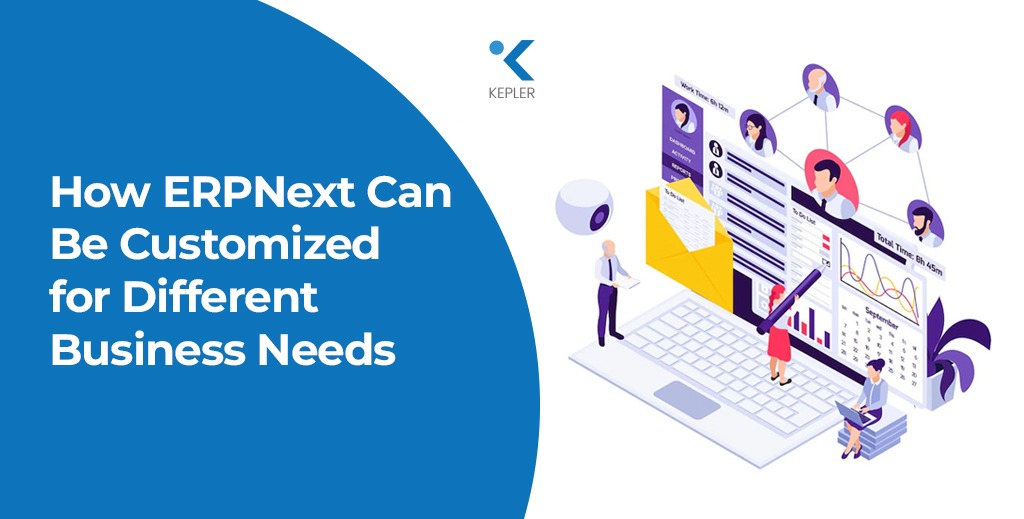
In today’s fast-evolving digital economy, businesses across industries seek smart and flexible business software that adapts to their specific workflows instead of forcing them into rigid templates. This is where ERPNext software shines. Designed as an open-source, comprehensive business solution, ERPNext integrates multiple departments such as accounting, sales, HR, inventory, and project management into a single unified platform, ensuring smooth operations and real-time collaboration.
Unlike many traditional ERP systems, ERPNext’s greatest strength lies in its customizability. It’s not just a one-size-fits-all ERP but a framework that evolves with your organization’s growth and unique operational demands. Whether you run a small retail store, a mid-sized service firm, or a large-scale manufacturing unit, ERPNext can be precisely tailored to your niche requirements. This adaptability enables businesses to leverage automation, enhance efficiency, and maintain a competitive edge in dynamic markets.
Through this blog, we’ll explore how ERPNext customization empowers various businesses. You’ll discover how its modular architecture supports different industries, how its tailored workflows improve overall performance, and how specific departments from sales to HR can benefit from a more personalized ERP experience. We’ll also examine the role of companies in helping organizations implement and customize ERPNext for maximum impact.
Understanding ERPNext Customization
Before diving into industry-specific examples, it’s essential to understand how ERPNext customization works. ERPNext’s open-source framework allows deep flexibility without compromising on performance or scalability. Let’s explore the different levels of customization available:
Module Customization
ERPNext comes preloaded with modules such as Accounting, Manufacturing, CRM, HR, and Sales. Depending on the size and needs of the business, companies can add or remove modules to reflect their operational structure. For instance, a consultancy firm may focus on CRM and Projects, while a manufacturing company emphasizes Production and Inventory.
Field Customization
Every business collects unique data. ERPNext allows administrators to add custom fields or modify existing ones across forms, like creating a “Client Priority” field in CRM or adding a “Batch Expiry Date” in Inventory. This ensures critical information aligns with the organization’s data collection framework.
Workflow Customization
One of ERPNext’s most powerful features is custom workflow creation. Businesses can map their processes, like sales approvals, leave requests, or invoice validations, into predefined workflows with automated approval steps and role-based permissions. This not only minimizes human errors but also ensures smooth task progression.
Report Customization
Decision-makers need precise insights. ERPNext allows building custom reports using filters, scripts, and dashboards. Whether it’s daily sales analytics, performance KPIs, or monthly financial overviews, customized reports empower better decision-making.
In essence, ERPNext customization transforms the system from a generic ERP to a personalized digital ecosystem that mirrors the company’s distinct identity.
Customizing ERPNext for Different Industries
ERPNext is built to serve a wide spectrum of industries. Its modular and flexible structure allows seamless adaptation across sectors, ensuring every business can manage its distinct workflows. Here’s how ERPNext can be tailored for key industries:
Manufacturing Industry
Manufacturers rely on precision, timing, and efficiency. Customizing ERPNext for manufacturing enables companies to:
- Automate production planning with real-time material availability checks.
- Maintain a multi-level bill of materials (BOM) to enhance quality control.
- Track work orders using custom dashboards for performance metrics.
- Integrate quality inspection templates and maintenance scheduling.
Manufacturers can customize reports for production costs, energy usage, or downtime, ensuring process transparency and cost optimization.
Retail Industry
Retail operations demand agility and intelligent inventory control. For retail businesses, ERPNext can be customized to:
- Implement Point of Sale (POS) systems with tailored receipts and discounts.
- Synchronize online and offline inventory through custom integrations.
- Set up automated reorder levels and stock movement alerts.
- Create custom customer segmentation dashboards for loyalty tracking.
By customizing ERPNext’s CRM and eCommerce modules, retailers achieve smoother sales cycles and improved customer retention.
Service Industry
Service-based firms like agencies, consultancies, and IT providers depend on time efficiency and accurate billing. With ERPNext customization, they can:
- Personalize project templates, including milestones, time tracking, and budgets.
- Automate invoice generation based on tracked billable hours.
- Integrate communication tools for seamless client collaboration.
- Customize employee utilization and profit margin reports.
ERPNext’s project and timesheet modules, when customized, enable streamlined service delivery and accurate revenue recognition.
Customizing ERPNext for Different Business Functions
Beyond specific industries, ERPNext’s modular design ensures each business function can also be optimized independently. This flexibility empowers department heads to focus on core goals while maintaining data consistency.
Sales and Marketing
For sales teams, ERPNext can be customized to:
- Manage lead scoring and prioritize opportunities.
- Forecast sales trends with tailored analytics dashboards.
- Automate marketing campaigns across multiple channels.
- Personalize quotation templates and approval workflows.
These modifications align sales goals with company-wide performance metrics, ensuring timely conversions and campaign transparency.
Finance and Accounting
Finance departments can leverage ERPNext customization to:
- Implement custom financial reports for specific accounting standards.
- Automate budget approvals and cost center management.
- Monitor cash flows and tax compliance through dynamic dashboards.
- Set up role-based permissions for auditors and CFOs.
These configurations strengthen financial control, minimize errors, and offer real-time financial clarity for leadership.
Human Resources (HR)
In HR, ERPNext can simplify complex people processes:
- Customize employee records to include skill metrics or certifications.
- Create structured performance appraisal templates tied to departmental KPIs.
- Automate payroll processing, attendance rules, and leave policies.
- Generate analytics on retention rates and workforce engagement.
Customized HR workflows improve organizational culture while ensuring transparency in employee management.
Benefits of Customizing ERPNext
Customizing ERPNext leads to measurable benefits that enhance productivity, decision-making, and scalability.
Increased Efficiency
Automation and process alignment eliminate redundant manual tasks, reducing errors and delays across departments.
Improved Decision-Making
Custom dashboards and real-time analytics offer leaders actionable insights, enabling data-driven decisions that improve overall agility.
Enhanced User Experience
Custom interfaces tailored for teams simplify daily tasks, improving system adoption and overall employee satisfaction.
Scalability
As businesses expand into new markets or services, ERPNext grows with them, offering advanced modules and deeper integrations that support future scaling.
FAQs
1. Is ERPNext suitable for small businesses?
Yes. ERPNext’s modular structure allows small businesses to start with essential features and scale as they grow.
2. Can ERPNext integrate with third-party apps?
Absolutely. ERPNext supports integrations with payment gateways, eCommerce platforms, and API-based applications.
3. How long does ERPNext customization take?
Timelines depend on complexity and scale, but with expert assistance from teams like Kepler Tech in Dubai, implementation can be quick and efficient.
4. Is ERPNext open-source and secure?
Yes, ERPNext is open-source and built with robust security protocols to protect company data.
Conclusion
As industries evolve, businesses need software that keeps pace with change rather than restricts it. ERPNext software emerges as a powerful, flexible, and scalable business solution that enables organizations to align technology with their goals. Through targeted customization, whether in manufacturing, retail, services, or core departments, companies can foster innovation, operational efficiency, and long-term growth.
Organizations looking to maximize the potential of ERPNext should consider partnering with experts like Kepler Tech LLC, recognized as one of the best business solution providers in Dubai and across the UAE, to tailor ERPNext perfectly to their unique processes. With the right customization, ERPNext doesn’t just manage business operations; it transforms them for a smarter, data-driven future.