keplertech

Managed print service

Buying a Printer With or Without AMC: Which Is Better for Your Business?
Managed print service

Buying a Printer With or Without AMC: Which Is Better for Your Business?

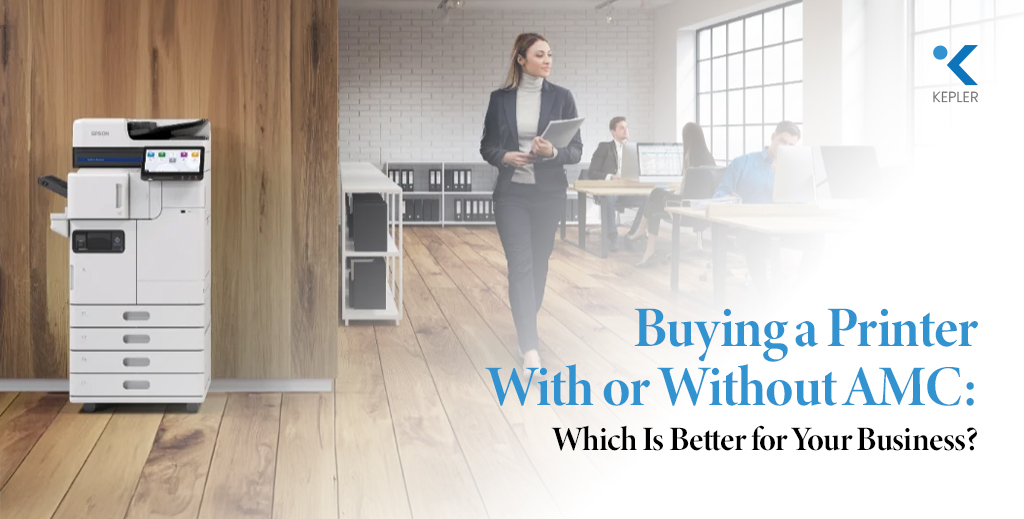
In modern offices across Dubai and the UAE, printers remain one of the most essential workplace tools. From invoices and contracts to reports and operational documents, office printers quietly support the daily workflow of nearly every organization. While digital transformation continues to reshape business operations, printing remains critical for documentation, compliance, and client communication. However, when companies plan to invest in a new printer, they often face an important question: Should they simply buy a printer, or choose a printer purchase with a printer annual maintenance contract? At first glance, purchasing a printer alone may appear to be the easiest and cheapest option. But many businesses quickly discover that the true cost of printing goes far beyond the initial purchase price. Maintenance issues, technical failures, spare parts replacement, and downtime can quickly disrupt productivity and increase operational costs. This is why many organizations today are turning to managed print service solutions, where printers are purchased along with a printer annual maintenance contract that ensures regular servicing, technical support, and operational reliability. So which option truly delivers better value for businesses? Before we explore the answer, let’s first understand the key differences between a printer purchase and a printer purchase with AMC, and why this decision matters for businesses operating in Dubai and across the UAE. Understanding Printer Purchase vs Printer Purchase with AMC Choosing between purchasing a printer alone and purchasing one with an annual maintenance contract can significantly affect the long-term performance and cost efficiency of your printing infrastructure. Let’s break down both approaches. Printer Purchase Without AMC When a company purchases a printer without any maintenance agreement, the organization owns the equipment but is fully responsible for its upkeep. This means businesses must manage: At first, this may not seem like a problem. But over time, unexpected breakdowns or recurring technical issues can increase operational expenses and disrupt business operations. For businesses that rely heavily on printing, even a short period of downtime can delay workflows, interrupt document processing, and affect customer service. Printer Purchase with AMC On the other hand, purchasing a printer with a printer annual maintenance contract offers a proactive approach to printer management. With an AMC plan, businesses receive: This type of managed print service ensures that printers remain operational, efficient, and well-maintained throughout their lifecycle. Why This Matters in the UAE Business Environment Dubai and the wider UAE host one of the most competitive business ecosystems in the world. Companies operate in fast-paced industries where operational efficiency and productivity are critical. Businesses cannot afford unnecessary downtime caused by equipment failures. As a result, many organizations prefer printer management solutions that provide reliability and predictable operational costs. That’s why printer purchase with AMC has become an increasingly popular model among companies seeking long-term efficiency and operational stability. Now let’s explore the specific benefits that make AMC such a valuable solution. Benefits of Printer Purchase with AMC Choosing an annual maintenance contract for your printer, alongside your purchase, offers several advantages that go far beyond basic maintenance. Let’s look at the key benefits businesses experience. Cost Savings and Predictable Expenses One of the biggest benefits of an AMC plan is financial predictability. Without an AMC, printer repair costs can vary widely depending on the issue. A malfunctioning printhead, network connectivity problem, or mechanical failure can lead to unexpected service charges. With an AMC, these costs are typically bundled into a fixed service agreement. This allows businesses to: Over time, this predictable expense structure often proves more cost-effective than paying for multiple emergency repairs. Expert Technical Support Another major advantage of AMC services is access to experienced technicians who specialize in printer maintenance and troubleshooting. When technical issues occur, businesses with AMC support receive priority service from trained professionals. Instead of waiting for external technicians or attempting to solve problems internally, companies benefit from: This level of technical expertise ensures that printers return to operation quickly, minimizing disruptions. Reliability and Reduced Downtime Printer downtime can interrupt business workflows and delay critical processes. Imagine a finance team unable to print invoices, or a legal department unable to produce important documentation. Even minor printing disruptions can affect business productivity. With a managed print service, printers receive routine inspections and preventive maintenance. Technicians monitor system performance and detect potential issues before they cause major breakdowns. This proactive approach results in: As a result, businesses experience smoother operations and better productivity. Extended Printer Lifespan Office printers are significant investments, and organizations want them to last as long as possible. Without regular servicing, printers can deteriorate faster due to: A printer’s annual maintenance contract ensures that equipment is maintained using proper procedures and genuine components. Regular servicing helps extend the lifespan of office printers, delaying the need for expensive replacements and maximizing the return on investment. Peace of Mind for Business Owners and IT Teams Running a business already involves countless responsibilities. Managing printer maintenance should not add unnecessary stress to business owners or IT departments. AMC agreements provide peace of mind by ensuring that printer management is handled by professionals. This means: Ultimately, AMC transforms printer management from a reactive challenge into a reliable and predictable system. Why UAE Businesses Prefer Printer Purchase with AMC In the UAE’s competitive business landscape, organizations constantly seek solutions that increase efficiency while reducing operational risks. Printer purchase with AMC aligns perfectly with this goal. Many industries in Dubai depend heavily on reliable printing systems. These include: For these sectors, uninterrupted printing operations are essential for maintaining productivity and service quality. A printer’s annual maintenance contract helps businesses ensure consistent printer performance while minimizing downtime and operational disruptions. Additionally, companies operating in the UAE prefer managed print service solutions because they simplify device management and improve overall efficiency. Instead of worrying about printer maintenance, businesses can focus on their core operations while experts handle the technical aspects of printing infrastructure. This shift toward managed services reflects the growing demand for smarter and more reliable business solutions across the region. Key Considerations for Businesses

Buying a Printer With or Without AMC: Which Is Better for Your Business? Read Post »
The Technical Components of Managed Print Services Explained
Managed print service

The Technical Components of Managed Print Services Explained

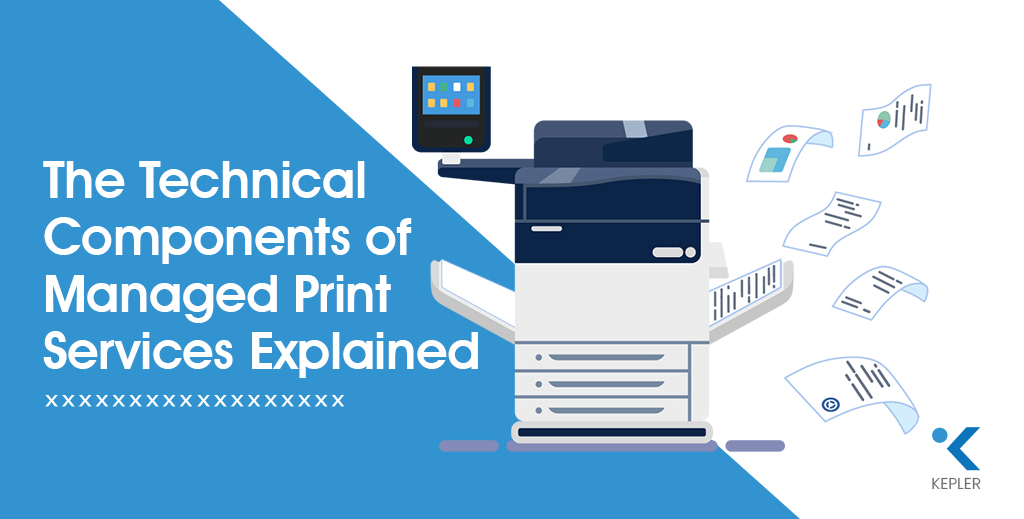
Printing may look simple on the surface: click print, collect documents, move on. But in modern business environments, printing is deeply connected to networks, security, workflows, and operational costs. As organizations grow, unmanaged printing often turns into a hidden drain on budgets, productivity, and IT resources. This is where managed print services come into play. Managed Print Services (MPS) go far beyond supplying printers or replacing toner. They rely on a carefully designed technical framework that monitors, manages, secures, and optimizes the entire print ecosystem. From device-level intelligence to network security and data analytics, MPS transforms printing into a controlled and measurable business process. At the center of this ecosystem is the office printer, not just as a standalone device, but as a connected endpoint within the organization’s IT infrastructure. Modern office printers interact with servers, user authentication systems, and cloud platforms, making them a critical component of operational efficiency and data security. When these devices are unmanaged, they can create blind spots in cost tracking, performance monitoring, and compliance. MPS ensures that every office printer operates efficiently, securely, and in alignment with broader business workflows. In many modern workplaces, this ecosystem is further supported through a printer rental & lease service, especially for businesses that want flexibility without heavy upfront investment. Rather than purchasing devices outright, organizations can deploy office printers on rental or lease models that scale with business needs. When combined with Managed Print Services, a printer rental & lease service ensures that hardware selection, maintenance, upgrades, and performance monitoring are handled as part of a single, optimized print strategy, reducing capital expenditure while maintaining full operational control. Before we dive into the individual components, ask yourself: Do you truly know what’s happening inside your print environment right now? Understanding the technical components of MPS is crucial for businesses that want to streamline their print infrastructure, improve operational efficiency, and reduce unnecessary costs. Many organizations underestimate how much unmanaged printing impacts daily operations. Printers often operate silently in the background, yet they consume resources continuously. Without visibility into usage, costs escalate unnoticed. MPS introduces transparency, helping businesses see printing not as a support function, but as a strategic operational layer that can be optimized. Let’s explore how it all works step by step. Overview of Managed Print Services Managed Print Services, often referred to as MPS, is a comprehensive approach to managing an organization’s printing environment. Instead of handling printers, supplies, maintenance, and security separately, MPS centralizes everything under a single, strategic framework. At its core, MPS: MPS works through a combination of software tools, monitoring agents, secure networks, and service-level agreements. Businesses of all sizes benefit—from small offices struggling with uncontrolled print costs to large enterprises managing hundreds of devices across multiple locations. One of the key strengths of MPS is its proactive nature. Instead of responding to printer issues after they disrupt work, MPS anticipates problems before they occur. This shift from reactive to proactive print management is what allows organizations to maintain continuity and predictability in their operations. Industries such as healthcare, education, finance, logistics, and corporate offices often rely on MPS to maintain control, compliance, and consistency in high-volume printing environments. Technical Components of Managed Print Services Managed Print Services function through a layered technical architecture. Each component plays a specific role, and together they deliver efficiency, visibility, and control. 1. Print Assessment and Analysis This is the foundation of MPS. It evaluates how printing is currently being used, identifying inefficiencies, redundancies, and cost drivers. Without assessment, optimization is guesswork. Print assessment acts as a diagnostic tool, revealing patterns that are otherwise invisible. It highlights who prints the most, which devices are underutilized, and where costs are unnecessarily high. These insights allow organizations to build realistic, data-backed optimization strategies. 2. Device Management Once data is collected, device management ensures that every printer and multifunction device operates efficiently, reliably, and within defined performance thresholds. Effective device management also standardizes the printer fleet. By reducing device variety and consolidating models, IT teams can simplify maintenance, training, and support while improving uptime across the organization. 3. Print Queue Management Print queues determine how jobs flow through the system. Effective print queue management prevents bottlenecks, prioritizes jobs, and reduces wasted output. Advanced queue management ensures that large print jobs don’t block critical documents. It also enables intelligent routing, automatically sending jobs to the most efficient device available. 4. Toner and Ink Management Automated monitoring ensures consumables are replaced only when necessary, eliminating emergency purchases and downtime. This component also reduces overstocking. Instead of storing excessive toner and ink, organizations maintain optimal inventory levels based on actual usage patterns. 5. Supplies Management This component handles the logistics of paper, consumables, and spare parts, ensuring uninterrupted printing operations. By centralizing supplies management, businesses gain better cost control and eliminate inconsistencies caused by decentralized purchasing. 6. Network and Security Management Printers are network endpoints and potential security risks. Network and security management protects data, enforces policies, and ensures compliance. Modern MPS platforms treat printers as part of the IT ecosystem, applying the same security principles used for servers and endpoints. This significantly reduces attack surfaces. Each of these components contributes directly to better print efficiency, lower operational costs, and improved reliability. Print Assessment and Analysis Print assessment is the diagnostic phase of MPS. It provides visibility into how printing actually happens across the organization, not how it’s assumed to happen. During this phase, MPS tools collect data such as: This data allows businesses to identify underused devices, overloaded printers, and unnecessary printing habits. Assessment data often reveals behavioral patterns, such as excessive color printing or printing large documents for brief reviews. Addressing these habits alone can lead to significant reductions in waste and costs. Assessment insights form the basis for print optimization, enabling data-driven decisions instead of assumptions. Device Management Effective device management ensures printers operate at peak performance throughout their lifecycle. Key aspects include: Device Monitoring and Reporting Real-time monitoring tracks device status, usage levels, and error conditions.

The Technical Components of Managed Print Services Explained Read Post »

Printer AMC vs FSMA Which is Suitable for Your Business
Managed print service

Printer AMC vs FSMA — Which is Suitable for Your Business?

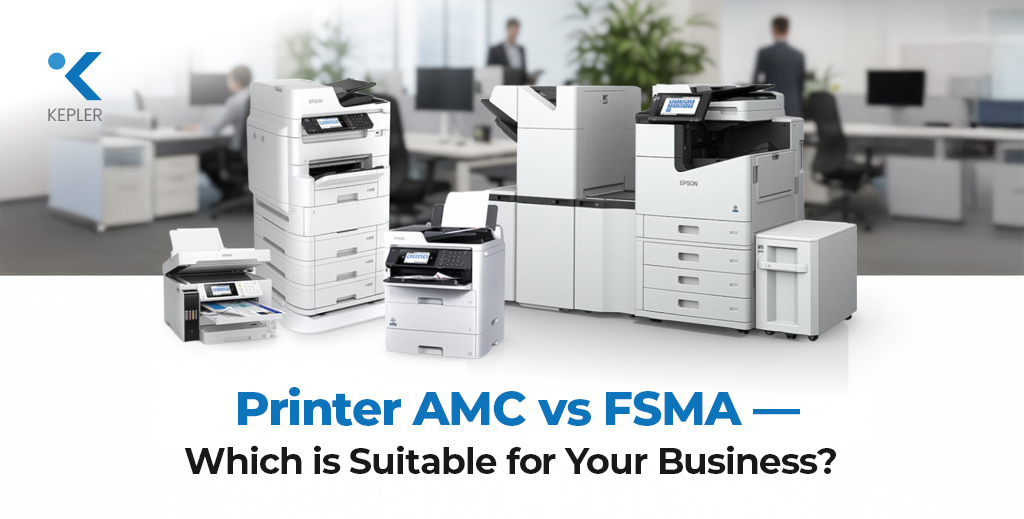
Think about the last time your office printer stopped working. It may be jammed when you were printing invoices. The toner may have run out during a client presentation. Or perhaps the machine simply displayed one of those mysterious error codes that no one in the office, no matter how “tech-savvy,” can decode. It always happens at the worst possible moment. In fast-paced business environments like Dubai and the GCC, where companies depend heavily on documentation, contracts, quotations, and compliance-related forms, a reliable printer is more than just an office tool. It’s the backbone of daily operations. One breakdown can interrupt workflows, frustrate employees, and create unexpected expenses. This is exactly why businesses choose structured service plans and, in many cases, even explore comprehensive Managed Print Service solutions to prevent downtime before it happens. But deciding which plan actually benefits your business, Printer AMC or Printer FSMA, can be confusing. Printer AMC (Annual Maintenance Contract) looks affordable at first. Printer FSMA (Full-Service Maintenance Agreement) appears premium but promises more coverage. So what’s right for you? Let’s break it down in a simple, interactive, and business-focused way so you can confidently choose the plan that supports your operations, budget, and long-term growth. Before We Dive In — A Quick Self-Check Ask yourself these questions: 1. Do your teams print frequently documents, reports, contracts, and marketing materials? If yes, downtime costs you real money. 2. Do you prefer predictable monthly expenses over surprise repair bills? If yes, cost consistency matters. 3. Do you want a service plan that includes everything: parts, toners, repairs, support without hidden fees? If yes, all-inclusive models save admin time and stress. 4. Do you want zero involvement in logging complaints, following up with technicians, or managing printer breakdowns? If yes, you need a service plan that does all of that for you. Now keep your answers in mind as we explore AMC and FSMA in depth. Understanding Printer AMC (Annual Maintenance Contract) Let’s Start With a Simple Scenario Imagine you pay a yearly maintenance fee for your printer. A technician visits a few times a year to clean the machine, lubricate moving parts, update firmware, and perform general upkeep. This routine care helps your printer function smoothly. That is Printer AMC in a nutshell. Printer AMC is essentially a preventive maintenance agreement. It gives you routine servicing and technical support at fixed intervals. Most small businesses are familiar with Printer AMC because it seems simple and budget-friendly. But the catch? The yearly fee only covers basic service. Almost everything else, especially the expensive stuff, is charged separately. What Printer AMC Typically Includes Printer AMC generally covers routine cleaning, mechanical check-ups, inspections, and minor adjustments. Technicians may fix small alignment issues or mechanical glitches during scheduled visits. Printer AMC also covers labor charges during these routine check-ups. The Real Limitations of Printer AMC This is where many businesses get caught off guard. While Printer AMC handles preventive maintenance, it does not cover most consumables like toner or ink cartridges. It also excludes major component replacements such as fusers, belts, motors, print heads, or circuit boards. If any of these fail, and they often do in medium to high-volume printing environments, you must pay separately. And repairs? Under Printer AMC, emergency breakdowns, unexpected failures, urgent technician visits, and most spare parts come with additional charges. These costs can appear suddenly and unpredictably, making it extremely difficult to estimate monthly or annual printer-related expenses. Another overlooked issue is time. Printer AMC requires administrative involvement. Someone from your team must report issues, follow up with the service provider, monitor repair progress, and sometimes even negotiate charges. So Who Really Benefits From Printer AMC? Printer AMC works best for businesses that print occasionally or own just one or two small office printers. In such cases, major breakdowns are less likely, and routine servicing may be enough. For low-volume printing environments like small retail shops, kiosks, small clinics, or consulting firms, Printer AMC can be a reasonable choice. But for medium to large businesses, Printer AMC often leads to: This is why many growing companies eventually shift away from AMC. Understanding Printer FSMA (Full-Service Maintenance Agreement) Before We Dive In — Imagine This Instead What if you never had to worry about paying for breakdowns, replacing expensive parts, or buying toner at the last minute? What if one fixed monthly amount covered everything—servicing, repairs, consumables, support, even emergency visits? What if printer downtime dropped to nearly zero because technicians managed everything proactively? This is Printer FSMA. Printer FSMA is a comprehensive, all-inclusive maintenance agreement that takes the entire burden of printer care off your shoulders. What Makes Printer FSMA Different Under Printer FSMA, you get full coverage for everything your printer needs labor, servicing, spare parts, major repairs, and even consumables like toner and ink cartridges. There are no surprise expenses because all the essential elements are already included. Most Printer FSMA plans operate on a “fixed monthly fee” or “per-print pricing,” which means your cost depends on monthly print volume. This structure ensures predictable budgeting, an invaluable advantage for any business. Why Printer FSMA Is Increasingly Popular Companies in the GCC are rapidly adopting Printer FSMA because it eliminates uncertainty. High-volume offices, law firms, logistics companies, educational institutions, marketing agencies, and corporate environments see immediate benefits from its all-inclusive model. When you never have to pay separately for breakdowns, spare parts, or toners, the administrative workload decreases drastically. Your accounting team also benefits because FSMA simplifies cost forecasting. Printer FSMA in Action Here’s what a Printer FSMA plan typically offers: FSMA usually runs on a 1–3 year contract, ensuring long-term stability and peace of mind. Printer AMC vs FSMA — Cost Breakdown Understanding the cost difference between AMC and FSMA is essential. Here is a simplified comparison: Feature AMC FSMA Upfront Cost High yearly fee No upfront cost (monthly billing) Repairs Extra charges Fully included Ink & Toners Not included Included Monthly Budget Highly variable Predictable fixed cost Best For Low-volume

Printer AMC vs FSMA — Which is Suitable for Your Business? Read Post »

Scroll to Top